There are two things I want to achieve with this post. The first is to re-establish my title convention - Thing / Thing.
Job done. Let's move on.
The second is to think about the games I have run over the years and try to identify what was good about them, what was bad, what I did wrong and what I did right.
I originally started this blog to ruminate over the games I was involved in at the time, both running and playing, and with the current draught that vision has been replaced with game design and idea dumping.
So, what have I run over the years? Let us look at the highlights and low points.
A number of people who have played my games over the years read this blog (or so they tell me). I'd be interested to know what you consider the highs and lows of our games, and any feedback on my GMing style would be welcome
Warning - This is a sizeable post...
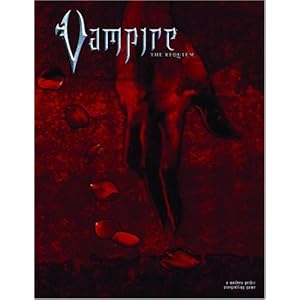
Vampire: The Masquerade (revised edition) - Australia game
I think this is the first game I seriously ran. I'd tried running Ars Magica 3rd Ed a couple of times, and just fallen flat on my face. I think I didn't get it.
With Vampire:TM I had been playing it for a couple of years, and was growing increasingly frustrated with the storyteller, who played favourites, had no grasp of narrative and either doggedly adhered to or completely ignored the rules without any rhyme or reason.
I bought a few books, read up, then took matters into my own hands.

I decided to set the game in Australia - I can't remember if it was Sydney or Melbourne. It had a Brujah Prince, though, as per the World of Darkness 2nd Ed sourcebook.
What went well, and why?
The preludes went exceptionally well. Almost too well, as they almost didn't stop. I ran solo sessions with each player, and a couple went on for over 12 hours. In retrospect I think I was confident in a one on one environment, and the sessions were very collaborative, as we both told the story of how this character became a vampire and fell in with the rest of the group.
I also had a couple of good ideas. One was inspired by a Billy Connelly in Australia show, in which he visited a place that sold houses on stilts - you buy the house, dig a load of holes and sink the stilts in, and your house is suddenly fixed. The house 'lot' was full of these houses on stilts, and had this weird two tier feel to it. An under house, with think beams and poles, and a 'street level', with loads of houses crammed tightly together. I ran a session in which the characters had to apprehend a fleeing vampire that had taken cover in one of these lots, which gave them loads and loads of rooms to search, lots of shadows to jump at and a fairly interesting chase scene and combat towards the end, especially when the fire started.
The game itself ran for a few months, with a high player and character turn over rate, which leads to the bad stuff...
What didn't go so well, and why?
I was unassertive and lacked confidence when it came to the larger group. I said 'yes' when I should have said 'no'. I let the disruptive players get away with murder and lost all focus. One of the low points was letting the players solder silver cutlery to the front of their Volvo and run down werewolves. Another was the clans I let in. I ostensibly wanted to run a Camarilla game, yet ended up with a Tzimisce, Giovanni, mortal sorcerer and a Caitiff that oddly had the exact same disciplines as an Assamite - I had told the player that he could not play an assassin, yet I let this pass. The game had a Brujah. He dropped out.
I think in the end it just petered out.
Vampire: The Masquerade (revised edition) - 1950's Sabbat game

This game owes its genesis to what is, in 20:20 hindsight, a fairly poor game concept. For some reason, God knows why, although it made sense at the time, I decided that a game revolving around a college fraternity in the 1950's, who were also evil vampires, was a great idea. I even convinced a number of people that it would be as well.
What went well, and why?
The main reason this game stood a basic chance of success was because the players all got on, roleplayed really well and formed a cohesive group identity that made sense in the context of the game. The characters were well formed, and it was the first time I had played with a group, rather than a collection of individuals. All the high points, for me, involved the players roleplaying well.
What didn't go so well, and why?
Me, basically. I lost control of the narrative almost immediately upon the mass Sabbat embrace, with the players making a group decision to not take crap from their new undead masters and positioning themselves as independents. From there on the story focus moved from my vision of proud Sabbat warriors growing in power through the decades to a small group of neonates fleeing the Sabbat and Camarilla, not trusting anybody and trying to carve out their own niche in the world without any guidance, support or knowledge of their new undead state and its social conventions.
Actually, that's a positive. The negative here is that I lacked clarity of vision, and had an incomplete understanding of my groups dynamic. I think the game would have been much better if I'd had these.
Other low points include my eagerness to randomly include elements from whatever supplement i'd bought that week, making it all a bit of a jumble.
And I point blank refused to include guns, because I didn't like/understand the gun rules.
The game eventually ended when the characters turned on each other. Rivalries and grudges that had festered for decades came to the fore, a character was murdered and the rest of the characters went their separate ways, no longer able to trust each other.
I don't think it could have ended any other way.
Hunter: The Reckoning / Mage: The Ascension / mortal psychic - Stouring
This is the first game that I actually ran to completion - I wanted to use a character i'd played in a Dark Ages chronicle as the 'big bad' in a modern day game, set it up, introduced the elements over time and the group eventually faced off against him and triumphed at the conclusion. An achievement.
The players were primarily from my previous 1950's Vampire game, so already I knew I had a group I could work with. I just had to plan it out, work with them and reign myself in a bit more.
What went well, and why?
The players were once again spot on, with an excellent mix of characterisation, creativity, humour and emotional range. The monster hunting motivation of the Hunters, mixed with the curiosity of the Mages/the psychic mixed well.
By far the best part for me was that I created a fictional small town and five surrounding villages, and added enough flavour and detail to make them real and believable - sometimes enough to drive the story. The fact that I'd built the town's history around the 'big bad' concept did me a few favours as well. I was so happy wit it, I've used the town, Stouring, again and again.
Some of the monsters the group faced worked well for me too. A favourite being a ghost who convinced them he was still alive (a risky gambit - he was lucky none of the Hunters switched on Second Sight or the Mages used any magic to determine his true nature) and then manipulated them into killing the werewolf that had quite justifiably killed him. The final showdown with him was played out very well by the group, who were furious at being used as pawns in his game.
The secondary bad guy, a Nephandi Mage, was introduced as a sympathetic figure early on, and took weeks to reveal his true colours. I was quite proud of that, and more than a bit excited before the session where the characters found out.
What didn't go so well, and why?
I think mixing Mages, Hunters and a psychic together in one game was a bit dodgy. I should have stuck with just Mages, or Just Hunters. It worked out in the end, but was an unnecessary risk.
After all that build up, I definatly through the final battle away. I think it lasted about four or five rounds, and was poorly executed. They met him in a narrow tunnel, traded blows and he fell over.
There should have been a number of challenging minions to wade through first, as well as environmental challenges, innocents to rescue and, dear God, somebody should have spoken.
Overall, I think I gave the characters too easy a time of it, fairly often, and should have pushed them more, used more obstacles at the same time and made them make difficult decisions.
Adventure!
Oh, how good is this game? I'm going to cover this one off really quickly - There's so much you can do with this game, and so much fun you can have, that it's entirely possible to just wing an entire story arc, and the players only really notice when ninjas attack randomly because the storyteller hadn't prepared, and ninjas were slightly more likely than neanderthals or dinosaurs (being a session set in a gentlemans club in London).
I have nothing but fond memories of this game, and the sad knowledge that it could have been the greatest game i've ever run if I just tried a little harder.
Dungeons & Dragons 3.5e - Tethyr / Saradush game
This game was a mixed bag of hours of painstaking preparation, and frantic improvisation. It's the second campaign that I actually completed from start to finish, and had two distinct volumes - Intrigue and revolution in Saradush, and an undead horde in Tethyr.
What went well, and why?
The Saradush plot went incredibly well. I'd originally intended to just run a few self contained missions in the city so the party could level up, but kind of pulled a massive, convoluted plot of intrigue, betrayal, treason, revolution and invasion out of the air without realising it.
I introduced the captain of the watch as an antagonist. He was unsympathetic, obviously up to something dodgy and existed to make life difficult for the party. Somehow he became an ally, then a friend as he tried to stage a coup in the city to prevent Yuan-Ti infiltrators from seizing power.
What was an after thought of including snake-men as a random encounter turned into an epic battle through burning streets, heading armies off at the pass and leading the city's gentry out of harms way before re-establishing government. Hooray!
I tried an experiment for a few sessions, where, as the plot emerged, I statted up a load of mid-level characters, gave them names and roles within the city watch and gave them to the party to play. After some confusion on the part of the players, they got to see the coup from another point of view and learn more about what was going on than they would have been able to as their characters. Then die heroically.
Oddly, I regard the session in which every single attending character died as they botched an encounter as a good one.
Two of the party couldn't make it that night, which was fine because we were a large group, and that left five other players. They were exploring sewers, or similar, when they ran into a Yuan-Ti and some henchmen. The Yuan-Ti used a mind affecting power to befriend the fighter who charged it, an, unfortunately that fighter had a Will save only slightly more potent than a pot plant.
Long story short, the fighters player happily slaughtered two of the party. The other two killed him, and were in turn murdered by the Yuan-Ti and his boys.
I think the Yuan-Ti went home with a big grin on his face that night.
So why is that a positive?
The massive party cull really polarized things. The two surviving characters became exceptionally motivated by their need to avenge the death of their friends, and the players creating new characters became invested in the game. They designed a new set of characters, who were all introduced at the same as an established group, and they didn't want to die again.
Sometimes GM needs to cull a few characters so that he's taken seriously.
That sounds harsher than it is. It really refreshed the dynamic, and that's a good thing.
What didn't go so well, and why?
I lost my cool a couple of times when running this game, and yelled at a couple of players. I'm not proud of it. I've always struggled with D&Ds rules, and get a little stressed out at times. Add in a seven person party with all the out of character chatter and distractions that come with that, and I failed to assert myself as a GM. Bad move. I've not done it since, but the memory still makes me wince.
World of Darkness - Mortals soul quest
I enjoyed this game, it had a lot of potential, but suffered from a lack of clarity of vision, again. I thought up a fairly solid lead in to the main plot, which was about the party having to reclaim their souls from a cross-roads demon, and kind of just let it sit there. The party dutifully drove around backwoods America looking for clues, and I gave them encounters from the Mysterious Places supplement, but nothing really happened.
In the end the party fractured as two characters gave up and signed up to work for the bad guys, and the rest ran off in separate directions.
World of Darkness - CSI
I still like this concept, and the plot for the first adventure is one I think i'd use again. I wanted to run a cop game set in the WoD, and see how normal detectives, lab techs and beat cops would investigate a supernatural crime. The first story centred around the botched dumping of a body that an elder vampire had drained of blood, and the local vampiric political power struggle. I did about the right amount of prep for it, and it worked well.
In fact:
What worked well, and why?
The first crime. I'd tweak some details if I ran it again, as nothing is ever perfect, and this definatly wasn't. It was pretty good though. I used the University setting from Mysterious Places for the second crime, and that had some classic moments as well. Particularly the undead janitors.
What didn't go so well, and why?
It became pretty apparent early on that a mortal cop is not equipped to bring a supernatural creature to justice. That kind of blew the game out of the water for me. We also had some issues with the groups ability to attend, including my own. We dropped three players by the end of the first crime, and only gained one, then had a handful of sessions in which two players alternated attendance, then we just stopped.
It's a real shame. The game did have a great deal of potential, although probably as a cop-oriented Hunter game.
World of Darkness - Quarantine City
The first WoD game I ran for The Role-players of Bolton (TROB). This one kind of reached its conclusion, although not to my satisfaction.
It was a zombie survival game, which I envisaged as
The Kill Point meets
The Walking Dead. The characters are taken hostage during a bank robbery, and whilst the bank is under siege, zombies rise up and destroy the city. The end goal, the 'survival point' was for the characters to make it out of the city before the military firebomb it to contain the infection.
What went well, and why?
The slow realisation that the dead had risen, and there were bigger things going on in the world than a mere bank robbery went well. The characters first encounter with a zombie child was fairly disturbing, as they realised that they had to completely dismember it to stop it coming for them.
The scenes where they saw cops shooting people who had been bitten unnerved them as well.
In one session, only two of the players could make it, so I ran a sequence in which their characters had to explore a Wal-Mart store room in the dark. At one point the only light source they had was the muzzle flash of each others pistols, whilst the zombies seemed to be doing quite well by sound alone. Tense and fast.
What didn't go so well, and why?
I'd agreed to end the game by a certain date, and had to artificially push events along, skipping scenes and glossing over challenges to get to the 'can they get out of the city' resolution.
I think a couple of characters did escape, a couple were infected and took their own lives, and they valiantly tried to leave each other behind to die so they could save their own skins.
Actually, that last point is so genre faithful that it's a positive.