Showing posts with label Full on Geek. Show all posts

Saturday, January 22, 2011

Brooding teens / Why aren't more people playing Vampire?

At the moment popular culture is saturated with vampires. Off the top of my head, I can think of the Twilight Saga, The Vampire Diaries, True Blood, Let The Right One In / Let Me In, 30 Days of Night (plus sequels), American Vampire and Underworld. 
Whilst it looks like Zombies are coming into fashion, there's a strong argument that Vampires have been enjoying a period of broad cross genre appeal. 

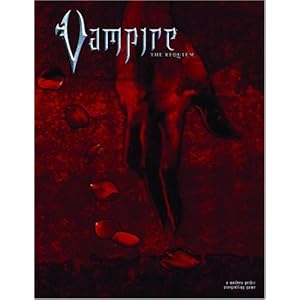
The thing is, a lot of these offerings are thematically or mythologically close to White Wolf's Vampire: The Requiem (or Vampire: The Masquerade, for those mid-school gamers out there). I would say that True Blood cleaves the closest, and it wouldn't surprise me if Charlaine Harris had played a little in the past. 
So, why is everybody playing D&D?
OK, not everybody is playing D&D. My mum isn't, but she doesn't play anything.
I pitched a Vampire game to my old gaming group a year or so ago, and was met with indifference at best, derision at worst, and not derision of the game, but derision of the whole vampire genre and the people who appreciate it. 

Times have changed. Here's the stereotype of somebody who likes vampire games and fiction:
Freaks and losers


Here's what the reality is more likely to be:
A broadly representational cross section of America
Whilst i'm not itching to run or play Vampire, I wouldn't turn it down if the opportunity presented itself. 

Sunday, December 26, 2010

Dungeons & Dragons / Narnia vs Middle Earth

I was watching The Chronicles of Narnia: Prince Caspian yesterday, and discussing it with my wife. We both feel it's a far superior film to The Lion, The Witch and The Wardrobe. In particular, I feel that the fight scenes are spectacular, and that the film does an excellent job of redeeming Edmund. During our conversation, I commented that I felt the director had taken a similar approach to Lord of the Rings, and really amped up the combat and drama.
Which got me thinking about roleplay, which most things do.
My train of thought was basically "how could I make this work as a game", which logically led to D&D.
Now, most people consider D&D to be 'heavily influenced by Tolkien', but I would like to present the argument that D&D is now set in Narnia, and has been for years.
If you want to play a Tolkien game, then may I suggest Warhammer Fantasy Roleplay.
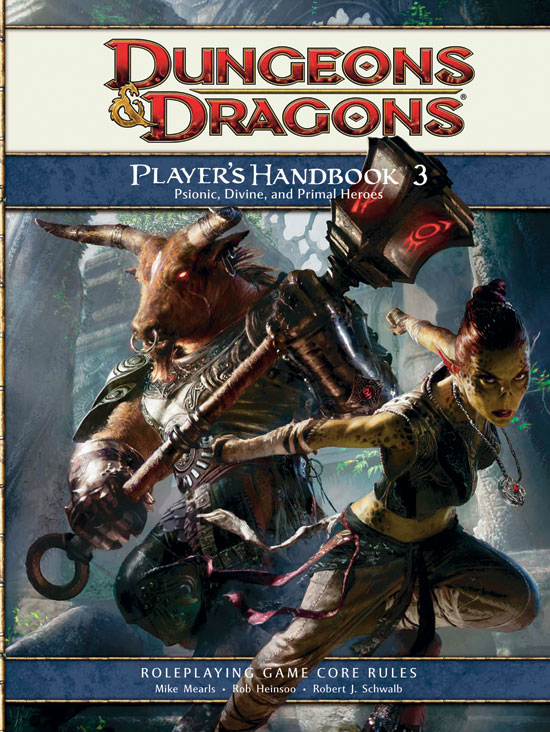
A Minotaur and a random fantasy creature
storm a citadel

My argument focuses on playable races. The Fellowship of the Ring are Dwarves, Humans, Elves and Hobbits. The playable races in Warhammer are Humans, Dwarves, Elves and Halflings (nee Hobbits). The playable races in D&D are almost too numerous to list, but include various races of beastman and all variety of fantastic creatures in a bizarre mixed bag of randomness. Like Narnia.
A Minotaur and some random fantasy creatures
storm a citadel

Market research / How cool is my wife?

I like roleplay games and video games. My wife knits. It is very rare for our hobbies to collide, but when they do I usually love the results.
So, as stated, my wife knits. She has knitted me a couple of dice bags in the past, a Cthulhu bag and an R2-D2 bag. They rock.
Don't just take my word for it, look:
The Cthulhu design was taken from a chart, and she designed the R2-D2
pattern herself.

I've been trying to tell her that people would want to buy bags like this, and would pay a good price for them.
I pointed out that the official Dungeons and Dragons dice cost £8.99 and the bag is a small bit of polyester with a logo on, and the bags she's producing are at least twice the size, made of quality wool and designed to specification.
(It's worth noting that any designs sold for cash money would have to be generic and definitely not infringe any trademarks, copyrights or intellectual rights. The knitting community are well versed in these things)

So, a question for you - would you buy a bag like this, and how much would you pay? Other comments are welcome and encouraged.
The R2-D2 bag holds my collection of 14 jumbo dice, and the Cthulhu bag holds, god, over 100 assorted dice, both loose and in smaller bags.

For some reason, this photo keeps defaulting to a sideways view. Gah!

Tuesday, December 14, 2010

Popularity / re-routed traffic

I've been developing this blog recently, and trying to turn it into a serious concern. Therefore i've been spamming old gaming buddies with a link to it, and putting more thought into what I write.
And having examined the stats provided by Blogger, this methodology is paying out.
Yesterday I smashed my previous best 'views in one day', and reached the heady heights of 27 views.
Awesome!

A small part of me suspects that people are erroneously viewing Total Party Kill because of the various links and images i've included.
Is this true? I'm not sure how i'd find out.
In the mean time, here's some unrelated images.


Monday, December 13, 2010

Rocks fall, everybody dies / You say "Total Party Kill" like it's a good thing

Thanks for the suggestions for a new blog name. I nearly went with "3d6 Sanity Loss", but drew back at the last minute.
Then I performed a Google search on "Rocks Fall" and stumbled across the incredibly useful TV Tropes site, which in turn introduced me to the phrase Total Party Kill. Which will be the new name of this blog.

Whilst we're on the subject of pictures and game humour, this is funny because it's true...

Saturday, November 27, 2010

Game design by idiots, part II

Oh, how I love the way that Google Buzz doesn't link into Google Blogger...

Sam H - System wise, I like the idea.
In terms of implementation, perhaps have x number of skill slots, and the player can fill them as they first come across the need. This allows relevent skills to be useful early on (and thus preventing early death). For character advancement, new blank skill slots?

Stats - I'd let Strength apply both physically and mentally. How do you envisage the bad things for running out of a stat?

I like all the settings apart from 01A, because like you I don't see how it works


Good feedback, Sam. The idea of having instantly assignable skills is interesting, and i've seen something similar used for languages in Gumshoe games (in which you just state that you know X number of languages, and assign them as and when the need arises). 


My thinking behind the free form skill system, which I didn't articulate in the last post, is that there exists a contract between player and GM. As a player, if I buy a skill, I want, no, expect, the opportunity to use it, otherwise I expect the GM to have a quiet word and tell me to spend my XP on something else, and possibly suggest an alternative that the group may require in the next couple of sessions.
I also expect GMs to tailor challenges within a game so that they are challenging to a party, and don't require specific skills the party do not possess to overcome.
Let me rephrase that - that don't require specific skills the party do not possess to survive. There's nothing wrong with non-essential encounters that require a specific skill set to beat, as long as the main plot or the characters survival do not depend on success.
Failure builds character.

I digress.
A contract between player and GM. 
I have started writing up my system, and in it I explicitly state that a player and GM must agree on a skill as it is chosen - what it is, how it works, what it covers and most importantly that the player character is allowed to take it. 
By buying the skill, the player agrees not to take the piss, and by allowing it, the GM agrees to give the player opportunity to use it. 
This is a bit deus ex machina, but plays out like a TV serial in which a new mcguffin, fact or ability is introduced at the beginning of the episode, and oddly becomes crucial to the resolution of the plot about ten minutes from the end.


So, at character creation, I have specified that players should initially choose two skills, one which they think would be useful to the group, and one which they think is cool.
The GM then designs the game sessions to call upon these skills. All other actions should then be achievable through a basic die roll or through the expenditure of Strength, Sanity or Luck.


Also, failure on a dice roll does not have to mean that a character does not perform the action - they could still scale the wall, but twist their ankle as they climb down the other side, or hack into the bad guys computer and access his files, but download a virus at the same time.


The uses of Strength and Sanity are pretty interchangeable, you just have to come up with a reason why Sanity is applicable to the physical action you are attempting, instead of the default Strength. 


Strength also acts as a characters hit points / health levels, so it's best not to burn the one stat at the expense of the other. 


What happens if you run out of either stat?
Here's an extract from my notes:


Running on Empty
What happens when a character exhausts their reserves of StrengthSanity or Luck?
A character can lose Strength due to two reasons - they can burn it, or they can sustain damage. If a characters last point of Strength is lost due to damage, the character falls unconscious for 1d6 minutes. After this time they regain consciousness, but are weak and in great pain. They can only walk slowly, or crawl, and any sudden or vigorous exertion will cause them to pass out again for another 1d6 minutes. Any further damage sustained whilst on zero Strength permanently reduces the characters maximum Strength score. Once a characters maximum Strength score is reduced to zero, they die. Trying to burn Strength whilst in this state counts as physical exertion. If this is attempted, the character does not gain an additional d6 for their roll, and passes out upon completion.
If the final point of Strength is burnt, the character does not immediately lose consciousness, but is totally exhausted, and does not have the energy to run or exert themselves. If they sustain any damage whilst exhausted, then the character will pass out for 1d6 minutes and lose a point of their maximum Strength  score and all affects described above will take affect.
When a character loses their last point of Sanity, they become emotionally exhausted, tired and unfocussed. They are quick to tears and quick to anger. 
If a character suffers further Sanity loss whilst on zero Sanity, they can develop and suffer from any number of severe phobias, extreme rage, obsessions, compulsions, ticks, delusions, experience paranoia or fall into a catatonic or fugue state, depending on the situation that caused the Sanity loss.
Running out of Luck does not impose any mechanical penalties, and a character can still function as normal, they just cannot benefit from burning Luck points. The Narrator, however, may wish to torment the character with a run of bad luck, unfortunate coincidences and fickle fate until the character regains at least one point of Luck.


I do like the concept of 01A, I just think it would work better as a hack of another system rather than shoe-horning it into this one.
Conceptually, it's a sci-fi mystery thriller. It's almost a superhero game, where all characters share the same origin - their mothers were artificially inseminated by the same alien/enhanced/bio-engineered/non-human (delete as appropriate) donor. The characters slowly realise that they are more than human, that they can do things and that there are numerous secret organisations - Government agencies, scientists, corporations, religions etc - that want to use, study, understand or destroy them.
So, setting wise, it would be a struggle to remain hidden whilst being hunted, not knowing who to trust, and trying  to discover the truth behind their parentage.
I know what I mean.
I think it would run better if the players didn't know they were playing it.

Anyways, good feedback and questions. Cheers Sam.

Friday, November 26, 2010

Game design by idiots

I've been toying with various game ideas - both setting and mechanics - for years now. The first game I ever ran, back in my halls of residence in 1996, was one I 'designed' myself.
It was rubbish, of course. You couldn't even say it was a good first effort.


Anyways, since then I have always felt the urge to design my own game, and have attempted to do so several times in the past. I have posted links to examples of these failed designs, such as Ghost Britain and the first attempt at Modern Mythic, in previous entries. Feel free to go back and have a look. 


At the moment I am mulling over a system and have started trying to pin it down on paper. 
It has a few (hopefully) simple core concepts. 
There are no defined skills. A character can attempt anything that the GM and player agree is theoretically possible, and the action is resolved by rolling a dice (any dice) with an even number being a success, and an odd number being a failure. 
My rudimentary grasp of maths tells me that this is a 50/50 chance. 


A player can add more dice to the roll in the following ways:

  • They can possess a relevant skill. Skills are not defined, and are free-form instead. Therefore one character could use their Murder skill to fight with, whilst the other could use their Bitch Slap skill (these are off the top of my head examples). Possessing a relevant skill allows the player to roll an additional dice
  • They can burn a point of their characters Strength or Sanity, which are slow refreshing resource pools. Strength is commonly used to augment physical actions, and Sanity for mental and social actions, although exceptions exist for compelling arguments (I burn a point of Strength to stay up all night researching this ancient language). Running out of Strength or Sanity are bad. Burning one point of either allows the player to roll an additional dice. Only one point of either stat may be burnt at a time.
  • A player can burn a point of Luck after a roll has been made to change the result of one dice. Luck can be spent to alter another players roll and even the GMs roll. Only one point can be spent at a time. Luck is a slow refreshing resource pool, like Strength and Sanity. Running out of Luck is also bad.
  • Certain bits of equipment may add a bonus dice, although these should be rare. I'd like to keep the number of dice rolled down with a cap of 3, making Luck a powerful stat.
Strength and Sanity also act as measures of a characters physical and mental health, whilst Luck can be used as a plot tool to get characters in the right (or wrong, if they've run out of Luck) place at the right time.


Damage drains either Strength or Sanity, and weapons do a set amount of damage.


I've been trying to draft up a basic intro to the rules, along with a character sheet and develop some settings for awhile now. Hopefully i'll be in a position to publish soon. Although probably not


I have a number of settings in mind, some of which feature rules variations.

  • Modern Mythic - the Vanilla setting, using the basic rules. Maybe with the addition of magic. Not sure yet. The setting is street level struggle between competing secret societies to possess and comprehend the secrets of the universe. These secrets are found in unexpected places, such as junk DNA, statistical data (such as the frequency of fatal to non-fatal car accidents in Calcutta) or audio recordings of one second of every single telephone conversation happening at midnight on Christmas Eve slowed down and played backwards. 
  • Danger Illustrated - A title i've had knocking around for over ten years. High adventure. Tomb robbing. Assassinations. Espionage. Danger Illustrated is an exclusive magazine available only to a select few (although it's probably a website in this day and age) that details where adventure can be found, for those brave enough to seize it. The system variation is that characters can burn multiple points of Strength, Sanity and/or Luck in one go, equal to a new Stat, Courage. This could also be applied to a pulp Sci-Fi setting as well.
  • Legend - A fantasy setting, in which all the characters have a great destiny, and are capable of performing legendary deeds related to that destiny. There's a new stat - Legend - that allows the character to perform one legendary deed per point of Legend a day, as long as it relates to their destiny. For example, a character with the destiny 'Greatest swordsman ever' would be able to automatically succeed at a number of legendary sword related feats each day equal to their Legend score, whilst a character with the destiny 'Powerful Archmage' would be able to cast a number of spells per day equal to the Legend score
  • 01A (Zero One Alpha) - A Sci-Fi setting, in which the characters discover that they are all related, that they all share the same biological father (but separate biological mothers), and that there are hundreds of them, scattered across the earth, all with a tattoo somewhere on their body with an alpha-numerical code that ranges between 01A and 99Ω. There are several possible explanations posited for this, from cloning to alien DNA, divine intervention to eugenics, with any number of motivations potentially driving them. The system variation would include psychic abilities and a stat called Potential, or maybe Perfection. Still not quite sure how it would work though.

Monday, October 4, 2010

Gumshoe / Trail of Cthulhu / Fear Itself

A few posts ago I got fairly excited about Trail of Cthulhu, a new system based on the Cthulhu Mythos, and licensed by Chaosium Games, therefore legit. It looked much much better than CthulhuTech, so was worth a look.
I asked for it for my birthday, and my wife dutifully bought it for me.
It is pretty ace.
The system, The Gumshoe System created by Robin D Laws (who my friend assures me is a genius), is a nice change of pace from most, if not all, other systems i've played. The focus is on investigation, and the piecing together of clues. Most games require you to pass a test to discover a clue, which can really stall play after a few unlucky rolls. The Gumshoe system takes a different approach - If you have a skill that could find the clue, and you state that you are using it, then you get the clue. The focus then falls on what you make of the clue, and where it leads you.
All pretty good.
A story should be set up to deliver one 'core clue' per scene, and a scene ends when the players uncover it. The clues should then add up to lead the players through the plot and to the final (and in the case of a Cthulhu game, maddening) truth.
Combat is simple and straight forward, and fairly lethal. There's no fiddly initiative, or distances, or speed. Mostly just death.
The most effective thing a character can do during combat is flee, which is so important that it has its own stat. At last!

The Cthulhu Mythos makes up the rest of the book, and is dealt with great affection, as can be seen whenever there's a sidebar that discusses the playtest phase and alternate rules. Think your character is too likely to survive? Here's an optional character creation set for creating doomed characters. Want to die when shot, rather than just take 'cinematic' damage? Knock your self out with these optional firearm rules. Want to create an uneasy sense of paranoia and claustrophobia when your Sanity score falls? Here's a way to portray insanity without telling the player what their character is suffering from.
There's the expected different investigator classes, and imaginative and inspirational write ups of monsters, cults and Mythos Beings, plus an introductory adventure. Brilliant. I heartily recommend it to everyone.

I enjoyed it so much, I bought a copy of Fear Itself. This spoilt the illusion somewhat.
Fear Itself is about 80 pages long, and is sold as an ideal vehicle for running one shot slasher movie / thriller games.
On the surface, I was quite excited. It also uses the Gumshoe system, and I like that it was short. Just the basics, no unnecessary fluff for the sake of it. We're all familiar with the genre it supports, so why waste time writing about it. Let's just get on. Oh, and it's a bit cheaper.
The problem is that it's only 53% new material.
The actual game system is word for word identical to Trail... and, I imagine, any other Gumshoe system game.
This means i've spent money on about twenty new pages, including the introductory adventure (more on that later), out of eighty.
Not so hot.
It's a supplement that's been sold as a stand alone product.

The intro adventure at the back deserves special notice, though, for one reason alone. You play LARPers. Really. And it mocks you remorselessly for even knowing what a LARPer is (although it does mock Vampire/Goth Doom Cookie LARPers more).
A little to close to the bone, I thought, although possibly great fun to play if you really hate a certain clique of roleplayers.

I'd still be interested in Mutant City Blues or The Esoterrorists though...
Thursday, February 11, 2010

Pride and / or Joy

I recently went full geek, and made up a gaming hobby case.
Bask in it's glory.