The idea is: One of the players, or an NPC associated with the players (preferably somebody they are bound to, like a younger sibling, best friend or lover), 'acquires' a briefcase. They don't know who it belongs to, they just have it now. They're not too keen to tell you how they got it, but they are keen to see what it is that's rattling inside it.
The briefcase is average size, clearly expensive, and locked. It's easy enough to jimmy the lock, though, with a little effort. It clicks open on the first or second attempt, leaving barely a scratch on the exterior faux leather.

There's a gun with at least one bullet down.
There's a kilo of coke or smack.
Some money, about a grand, with specks of blood across the edges.
An envelope containing photos of a naked and unconscious high school girl.
A 2gig memory stick full of spreadsheets, names, dates and map references.
A diamond ring.
The keys to a fast, expensive car.
From this point onwards, any number of things could happen. The players could decide to dispose of the briefcase and its contents. They might want to keep or use some of the stuff inside. They might think the best course of action is to turn it into the proper authorities. They might seek advice from somebody more experienced, or more influential.

Finally, the person who 'acquired' the briefcase will be arrested and charged with a string of heinous crimes - murder, drug trafficking, espionage, rape, fraud, kidnapping, robbery.
The evidence is overwhelming - witnesses placing the character at the scene of all crimes, video tapes, phone taps, forensics, legal documentation, motive, opportunity, means. It does not look good.
There are, however, at least two ways out of it.
- Commit a crime, put something from that crime inside the briefcase, and then allow somebody else to steal the briefcase. This is the easy option.
- Solve all the other crimes that have been covered up by the briefcase. This is the hard option.
So what is the briefcase? It's a magic item that diverts all suspicion and evidence of a crime from the actual perpetrator and onto an 'innocent' patsy instead. The unlucky patsy has to steal the briefcase and open it, and then suddenly becomes the chief suspect in multiple serious criminal investigations, and any 'unofficial' investigations that any wronged parties may be pursuing.
For example: Fingers Malone shoots Micky the Hat in the face after an argument about a card game. Fingers needs to lose the gun, fast, and needs to get himself an alibi faster. He puts the gun in the briefcase and leave the briefcase on the front seat of his unlocked car which he then parks in a bad part of town. Inevitably the briefcase is stolen by Sniffy Smith, a loser meth head looking for his next pipe. Within a week Sniffy is arrested for the murder of Micky the Hat after his DNA and finger prints are discovered at the crime scene, and Micky's mother recalls Micky arguing with somebody fitting Sniffy's description. A couple of days later, Sniffy is ganked with a shiv in the prison showers after Micky's gang pay another inmate to teach him a lesson.
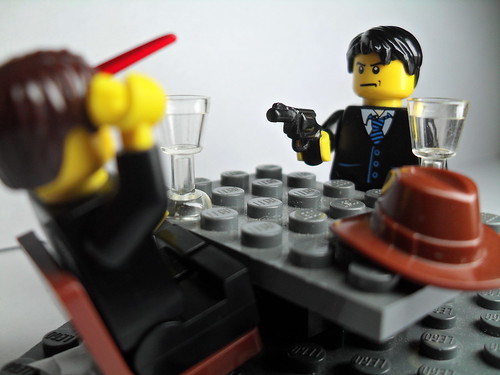
Unfortunately Sniffy isn't smart enough to do either, so is sent down the river and dies of a perforated kidney shortly afterwards.
Poor Sniffy.
EDIT
The wireless keyboard on my desk top PC died the other night. Luckily shortly after completing a sentence. I was left with the dilemma of either a) publishing an incomplete post, or b) saving a draft until I sorted out my technical glitch.
I chose option a.
There are still a few points I wanted to cover with this post, and publishing them separately feels rather unsatisfying.
I tagged three games in the 'labels' field of this post: World of Darkness, The Esoterrorists and Fear Itself. Why? I'll tell you why...

The players themselves may already have committed a serious felony or two between them, and may relish the opportunity to get away with it. It would be easy to just let them, and in many ways, this is what should happen.
However, if they do choose this course of action, then they should have to make a high penalty Morality check, even if they're a Werewolf following Harmony (I guess - The book is all the way over there on my shelf, and it's late...).
So, the character can dispose of a potentially sticky problem, but they have to deal with the consequences of that - Morality loss - as they doom another innocent soul to life in prison/the death sentence/a grisly murder etc.

If the players are predisposed to investigating mysteries and bringing people to justice, then a Gumshoe game like Fear Itself or The Esoterrorists would work well with this object. Each item within the briefcase should provide a solid enough clue to begin an investigation into the crime and who committed it.
 Additionally, there's the investigation into the briefcase itself. It should have as exotic a backstory as you can muster - a cursed item, created by a tempting demon of wrath? An Esoterrorist tool pulled from the Outer Dark? A haunted item powered by a ghosts regret?
Extended research into the briefcase's past should pull up clues to it's powers and history - hints at when it may have surfaced before, possibly in other forms - a bag, a book, a cloth sack - and who may have benefited or suffered from it in the past. Characters can expect to have to pour over newspaper archives, police records, local history and interview key witnesses before they can piece together what it does.


